
INTRODUCTION
Our son’s first “big kid” room was a disaster for exactly nine days. We centered a tall dresser under the window, skipped the anti-tip strap because we were “getting to it,” and on day nine he climbed it to reach a stuffed dinosaur on top. Nothing fell, backward, onto carpet, and cried more from fright than pain. That week we rebuilt the whole room around toddler bedroom ideas that put safety first and style second, and it changed how fast he settled at night.
This guide is for parents furnishing a first “big kid” room, right now, on a real budget. You’ll get 35 specific layouts, from floor beds to shared-sibling setups, plus the exact safety steps we skipped and shouldn’t have.
Every idea below was independently researched and checked against current 2026 product listings and the latest Consumer Product Safety Commission (CPSC) safety data, not pulled from memory.
The best toddler bedroom setup for most families is a low floor bed (12–15 inches off the ground), open low shelving instead of a toy box, and every tall furniture piece anchored to the wall. IKEA’s UTÅKER stackable bed frame ($327 with two mattresses, rated 4.3 out of 5 stars from 199 reviews as of August 2026) is a reliable, budget-friendly starting point.
In this guide, you’ll discover:
- 7 floor bed and house bed layouts for the Montessori sleep transition
- 21 play, storage, and decor ideas sorted by room type and space
- The 3 safety steps that matter more than any paint color
Why Toddler Floor Beds Are Taking Over in 2026

The floor bed trend isn’t just aesthetic, it’s a sleep and independence strategy. A mattress at ground level removes the fall risk of a crib rail or twin bed frame entirely.
Toddlers between 18 months and 3 years old are also building gross motor confidence fast. Letting a child climb into their own low bed, instead of being lifted, supports that independence directly.
Design-wise, 2026 kids’ rooms are leaning warm and textural: pine wood tones, boucle rugs, and muted earth palettes replacing primary-color plastic decor. Storage is shifting from toy chests to open, labeled shelving so toddlers can see and choose their own toys.
Safety regulation is also shaping the trend. The CPSC’s 2023 tip-over report found that most child tip-over deaths involve kids ages one to three exactly toddler bedroom age which is why every idea in this guide treats anchoring as step one, not an afterthought.
Montessori-Inspired The Toddler Floor Bed & House Bed Trend
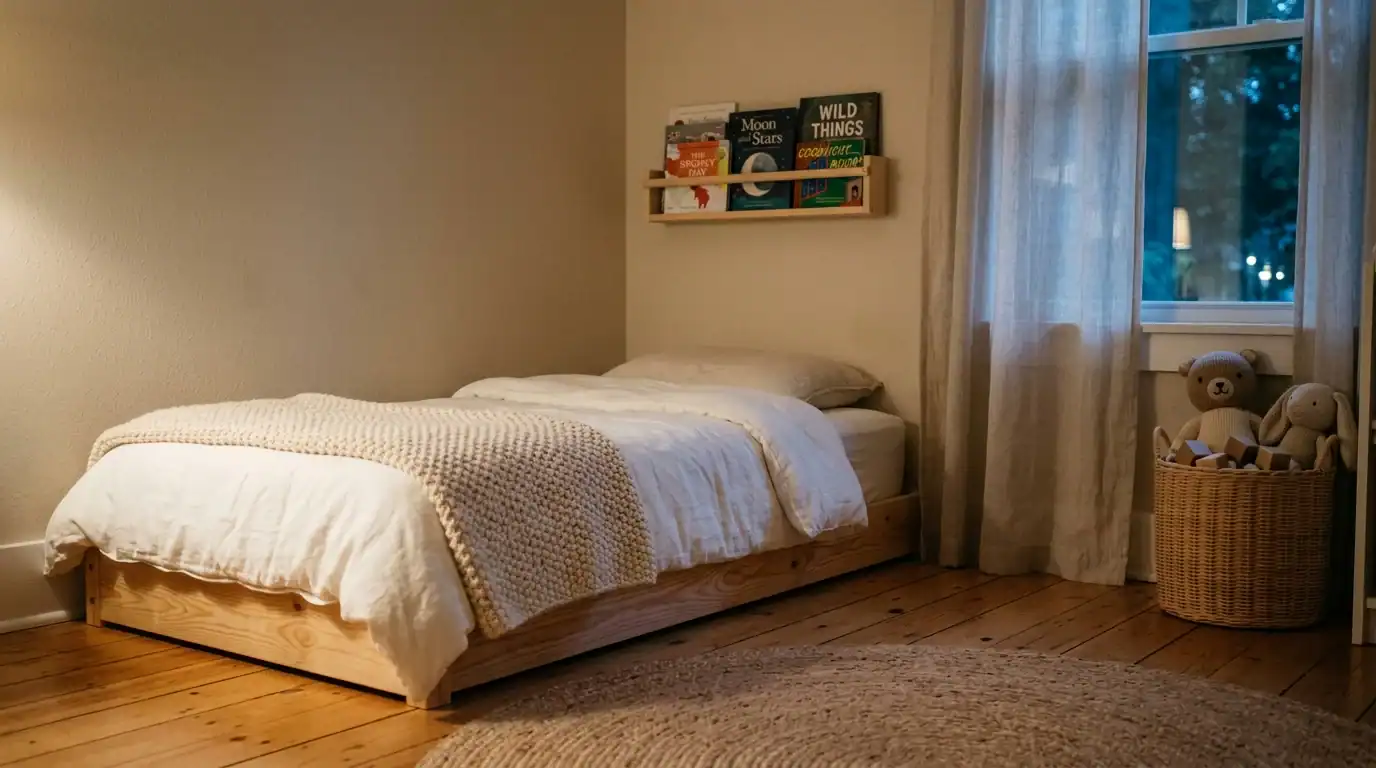
1. The Classic Minimalist Toddler Floor Bed

A twin mattress placed directly on a low wood platform gives toddlers full visual and physical access to their own room. It works because there’s no rail to climb over and no ladder to fall from.
Choose a platform 12–15 inches high, in a corner away from windows and cords. Add a fitted sheet and one lightweight blanket, nothing loose enough to cover the face.
2. The Whimsical Wooden House Bed

A house-shaped frame turns bedtime into a destination instead of a task. The peaked roofline reads as a little home within the room, which many toddlers find calming rather than exciting.
Pick unfinished or lightly stained pine so the frame blends into any color scheme later. Keep the roof beams rounded, not sharp, and confirm the frame sits flush with no gap a foot could slip under.
3. Low-Profile Mattresses for Independence

A firm, low-loft mattress (6–8 inches thick) keeps the sleep surface close to the floor even without a frame underneath. That low height is what actually enables safe, independent climbing in and out.
Look for a certified foam or hybrid mattress rated for toddler weight, not a leftover crib mattress, since those are sized differently. Firmness matters more than plushness at this age.
4. Canopy-Style Frames for Floor Beds

A soft canopy over a floor bed adds a sense of enclosure without walls or rails. It’s especially useful in shared or open-plan rooms where a toddler needs a visual “this is my space” cue.
Mount the canopy hardware to the ceiling joist, never to the bed frame itself, and use breathable cotton gauze instead of heavier fabric that could pool if pulled down.
5. Ground-Level Reading Nook Integrations

Placing a small cushion and low bookshelf right beside the floor bed turns wind-down time into a natural routine. The proximity matters toddlers are far more likely to grab a book if it’s within arm’s reach of where they already are.
Use a floor cushion instead of a chair so there’s nothing to tip. Rotate 5–6 board books forward-facing at a time.
6. Floor Beds with Sensory Play Rugs

A textured rug beside the floor bed extends the “bed zone” into a soft landing and play surface. Choose one with a low, dense pile so it doesn’t bunch under small feet.
Wool-blend or cotton rugs under 0.5 inches thick vacuum easily and won’t trap a rolling toddler’s foot the way shag styles can.
7. Safe Sleep Zones for Active Sleepers

Toddlers who roll and climb in their sleep need a padded perimeter, not a raised frame. A firm floor mattress on a rug, with nothing stacked nearby to climb, is the safest setup for this sleep style.
Keep at least 3 feet of clear floor around the mattress. Skip bed rails for floor beds entirely they’re not needed at this height and can create a pinch point.
|
Product |
Best For |
Buyer Rating |
Where to Buy |
|---|---|---|---|
|
IKEA UTÅKER Stackable Bed (2 mattresses) |
Budget floor/stackable bed |
4.3★ (199 reviews, verified 2026) |
IKEA |
|
Basic pine platform floor bed frame |
Classic minimalist setup |
4.2–4.6★ typical range |
Amazon, Wayfair |
|
Wooden house-frame bed (peaked roof) |
Whimsical house bed |
4.3–4.7★ typical range |
Etsy, Amazon |
|
Firm twin foam mattress, low-profile |
Independent sleep transition |
4.4–4.8★ typical range |
IKEA, Amazon |
|
Cotton gauze bed canopy |
Canopy floor beds |
4.1–4.5★ typical range |
Amazon, Target |
|
Low-pile wool-blend area rug (5×7) |
Sensory play rug |
4.3–4.6★ typical range |
IKEA, Target |
Toddler Room Planner
Wants free Toddler Room Planner. Just submit your E-mail and get free download link on Mail box today.
No spam, just serenity.
Engaging Toddler Room Ideas for Play and Development
8. Accessible Low Shelving for Toy Rotation

Open shelves under 24 inches tall let toddlers choose and return toys on their own. That independence cuts down on the “everything dumped on the floor” cycle better than any closed bin does.
Rotate 6–8 toys at a time and store the rest out of the room. Anchor every shelf to the wall regardless of height.
9. Indoor Slides & Climbing Triangles

A small wooden climbing triangle with an attached slide channels a toddler’s need to climb into one safe spot, instead of the dresser. It works because it satisfies the urge directly rather than fighting it.
Place it on a rug or padded mat, at least 2 feet from any wall corner or furniture edge.
10. The Ultimate Toddler Room Dress-Up Corner

A low hook rail with 4–5 costume pieces turns imaginative play into an easy, tidy corner. Hooks work better than a closet rod at this age since toddlers can’t yet manage hangers.
Mount hooks no higher than a toddler’s shoulder, roughly 24–28 inches from the floor.
11. Interactive Chalkboard Wall Paint

A chalkboard-painted wall section gives toddlers a sanctioned space to draw on the walls, which most will attempt anyway. Framing it as “your wall” tends to reduce marker incidents elsewhere in the house.
Use non-toxic chalkboard paint and keep the section under 3 feet tall so it stays within toddler reach only.
12. Cozy Corner Teepees for Quiet Time

A small fabric teepee gives a toddler a defined quiet-time space separate from the sleep zone. Separating “calm down here” from “sleep here” can actually make both routines easier to hold to.
Choose a teepee with a weighted, wide base so it can’t tip if climbed on, and skip any with long hanging ties.
13. Forward-Facing Book Displays

A shallow ledge shelf that displays book covers, not spines, gets far more books picked up than a traditional bookshelf. Toddlers choose by picture recognition before they read titles.
Mount the ledge at seated-toddler eye level, around 12–16 inches up, and secure it into wall studs.
14. Activity Tables for a Functional Kids Room

A low, toddler-height table with two chairs gives puzzles, snacks, and art a defined spot outside the play rug. It keeps small parts contained and off the floor near the bed.
Choose a table 18–20 inches high with rounded corners and a wipeable laminate top to ensure safety and easy cleanup during daily activities.
|
Product |
Best For |
Buyer Rating |
Where to Buy |
|---|---|---|---|
|
3-tier low open toy shelf |
Toy rotation storage |
4.4–4.7★ typical range |
IKEA, Target |
|
Wooden climbing triangle + slide |
Indoor climbing outlet |
4.3–4.6★ typical range |
Amazon, specialty retailers |
|
Low wall hook rail (5-hook) |
Dress-up corner |
4.2–4.5★ typical range |
Amazon, IKEA |
|
Non-toxic chalkboard wall paint (1 qt) |
Chalkboard accent wall |
4.3–4.6★ typical range |
Amazon, hardware stores |
|
Weighted-base fabric teepee |
Quiet-time corner |
4.1–4.5★ typical range |
Amazon, Etsy |
|
Toddler activity table + 2 chairs |
Art & puzzle station |
4.3–4.7★ typical range |
IKEA, Target, Amazon |
Creative Boy Room & Gender-Neutral Kids Bedroom Ideas
15. The “Great Outdoors” Adventure Theme

A palette of forest green, tan, and warm wood signals “adventure” without relying on cartoon characters that get outgrown fast. It’s a theme that ages gracefully from toddler into early school years.
Layer in a canvas tent, a few pinecone-print pillows, and one large tree decal instead of full-wall murals.
16. Subdued Transportation & Vehicle Decor

Small wooden truck and airplane silhouettes on a neutral wall read as intentional design, not a toy explosion. Muted colors here matter more than the vehicle count.
Stick to 3–4 wall pieces max, spaced evenly, rather than a crowded collage.
17. Neutral Earth Tones and Wooden Accents

A base palette of oatmeal, clay, and unfinished wood gives a kids bedroom a calm, grown-up feel that still works for a toddler. This palette is one of the most-searched kids bedroom looks for 2026.
Add color only through 2–3 textiles a rug, a throw pillow, one curtain panel so the room stays easy to update.
18. Space Exploration Boy Room Setup

Deep navy walls with a scatter of gold star decals create a space theme without needing rocket-shaped furniture. The effect comes from the wall, not the accessories.
Use glow-in-the-dark star decals sparingly near the ceiling line only, out of a toddler’s reach.
19. Subtle Jurassic Dinosaur Accents

A single fossil-print rug or dinosaur silhouette decal delivers the theme without covering every surface. Restraint here tends to age better than an all-over dinosaur print does.
Pair it with plain green or sand-colored bedding so the theme reads through texture, not clutter.
20. Boho-Chic Gender-Neutral Styling

Macrame wall hangings, a jute rug, and a rattan shelf give a toddler room a soft, textural look that isn’t tied to a specific theme. It also tends to suit siblings of any gender later.
Keep macrame pieces mounted flush and out of climbing reach no long dangling cords near the bed.
21. Abstract Murals and Peel-and-Stick Decals
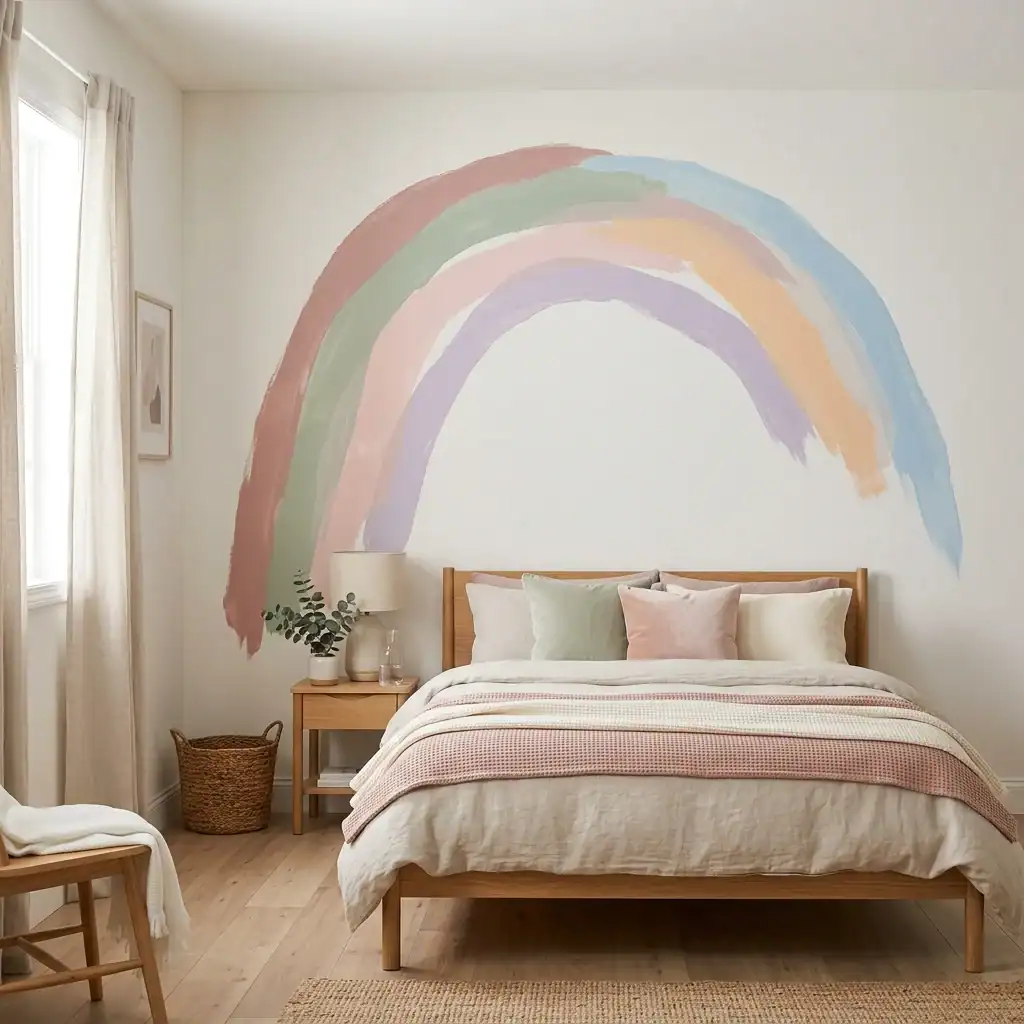
A hand-painted abstract arch or rainbow shape on one wall gives a toddler room a design “moment” without full-room commitment. Peel-and-stick versions let renters do the same look damage-free.
Limit the mural to one wall and keep paint low-VOC and fully cured before moving furniture back.
|
Product |
Best For |
Buyer Rating |
Where to Buy |
|---|---|---|---|
|
Peel-and-stick arch wall decal |
Abstract mural look |
4.3–4.6★ typical range |
Amazon, Etsy |
|
Jute area rug (5×7) |
Boho-neutral styling |
4.2–4.6★ typical range |
Target, IKEA |
|
Macrame wall hanging |
Boho accent wall |
4.4–4.7★ typical range |
Etsy, Amazon |
|
Glow-in-the-dark star decal set |
Space theme ceiling |
4.2–4.5★ typical range |
Amazon |
|
Fossil-print accent rug |
Dinosaur theme accent |
4.1–4.5★ typical range |
Etsy, Wayfair |
|
Wooden vehicle wall silhouettes (set of 3) |
Transportation decor |
4.3–4.6★ typical range |
Etsy, Amazon |
Small Kids Bedroom and Clever Storage Solutions
22. Multi-Functional Play Couches

A modular foam play couch works as seating, a reading nook, and a soft climbing structure in one footprint. That triple use is what makes it worth the space in a small room.
Choose washable, zip-off covers and pieces light enough for a toddler to rearrange without help.
23. Under-Bed Storage Baskets

Low, wide fabric baskets slide under a floor bed platform and use space that’s normally wasted. They’re ideal for out-of-season clothes or extra bedding, not daily-use toys.
Pick baskets under 6 inches tall to clear most floor bed frames, with cutout handles instead of hard hardware.
24. Floating Shelves to Maximize Floor Space

Wall-mounted shelves free up floor area for play without sacrificing storage or display space. In a small room, floor space matters more than wall space, so this trade is almost always worth it.
Install shelves into studs, spaced at least 20 inches apart vertically, and keep the bottom shelf below 30 inches.
25. Built-In Wardrobes at Toddler Height

A wardrobe with a lower hanging rod, sized for toddler-length clothes, lets a child start picking their own outfits. It also removes the wasted air space above adult-height rods in a small closet.
Set the rod around 24–30 inches up and keep the upper cabinet section locked or empty until the child is older.
26. Compact Corner Bed Placements

Angling a floor bed into a room corner frees up the two longest wall runs for storage or play. As a result, corner placement is one of the simplest small-room fixes and costs nothing to try first.
Leave at least 18 inches of clearance on the open side for safe entry and exit.
27. Utilizing Vertical Wall Space for Decor

Hanging art, hooks, and shelves above the toddler’s reach line keeps a small room from feeling cluttered at floor level. Vertical layering is a designer trick for making square footage read larger than it is.
Keep anything under 40 inches strictly decorative and unbreakable, since that band is still within toddler reach.
28. Foldaway Furniture for a Small Kids Bedroom

A wall-mounted fold-down table or a stackable stool set gives a small room flexible floor space during play time. Folding it away after activities resets the room for sleep without extra furniture pieces.
Choose hardware rated for repeated daily folding, not a one-time-use hinge, since toddler rooms see heavy daily use.
|
Product |
Best For |
Buyer Rating |
Where to Buy |
|---|---|---|---|
|
Modular foam play couch set |
Multi-use seating/climbing |
4.2–4.6★ typical range |
Amazon, specialty retailers |
|
Under-bed fabric storage baskets (set of 2) |
Under-bed storage |
4.3–4.6★ typical range |
IKEA, Target |
|
Wall-mounted floating shelf (3-pack) |
Vertical storage/decor |
4.3–4.7★ typical range |
IKEA, Amazon |
|
Toddler-height wardrobe with low rod |
Independent dressing |
4.2–4.5★ typical range |
IKEA, Wayfair |
|
Fold-down wall desk |
Foldaway play surface |
4.1–4.5★ typical range |
Amazon, Wayfair |
|
Stackable toddler stool set (3) |
Foldaway seating |
4.4–4.7★ typical range |
IKEA, Amazon |
Shared Kids Room Ideas for Siblings
29. L-Shaped Toddler Bed Layouts

Placing two beds along adjoining walls in an “L” saves floor space while still giving each child a separate zone. It works better than parallel beds in most small shared rooms because it opens up the room’s center.
Leave a walkway of at least 24 inches at the L’s inside corner for safe nighttime access.
30. Separating Spaces with Strategic Area Rugs

Two different rugs, one per child’s zone, create a visual boundary without a physical divider. Toddlers pick up on the cue faster than you’d expect once it’s repeated a few times.
Choose rugs in the same material but different colors or patterns so cleaning stays consistent.
31. Bunk Beds with a Bottom Floor Mattress

A bunk-style frame with the top bed removed and a low mattress on the bottom rail gives an older sibling structure while keeping the toddler’s sleep surface low. It’s a practical middle step before a true toddler-height bunk.
Never let a child under 6 use the top bunk position, per most manufacturer safety guidance.
32. Symmetrical Decor in a Shared Kids Bedroom

Matching lamps, shelves, and bedding on each side of a shared room reduce sibling comparison arguments before they start. Symmetry also just reads calmer in a room with two beds.
Personalize with one unique item per child a name sign or favorite color pillow layered onto the matching base.
33. Personalized Wall Art Over Each Bed

A name print or initial hung above each child’s bed anchors their individual space inside a shared room. In turn, it gives each toddler a clear answer to “which side is mine.”
Hang art on studs at a height that clears a standing toddler’s head, roughly 40–44 inches up. This way, the artwork stays visible while remaining safely out of the way.
34. Dual-Purpose Storage Room Dividers

A low, open-back shelving unit placed between two beds divides the room while doubling as shared toy storage. It’s more space-efficient than a solid divider panel in a small shared room.
Anchor the divider to the wall or floor, and keep it under 40 inches so sightlines stay open for supervision.
35. Curtained Sleep Zones for Privacy

A ceiling-mounted curtain track around each bed gives an older sibling a sense of privacy without walling off the toddler’s side. Moreover, it’s a flexible option that can be left open most of the time.
Use a breakaway curtain track, and keep curtain pulls and cords fully out of both children’s reach.
|
Product |
Best For |
Buyer Rating |
Where to Buy |
|---|---|---|---|
|
Low bunk bed frame, floor-height bottom |
Shared sibling sleep setup |
4.2–4.6★ typical range |
IKEA, Wayfair |
|
Matching rug pair (different colorway) |
Zoning a shared room |
4.3–4.6★ typical range |
Target, IKEA |
|
Open-back low shelf room divider |
Dual-purpose divider |
4.2–4.5★ typical range |
IKEA, Wayfair |
|
Personalized name wall print |
Individual bed zones |
4.4–4.8★ typical range |
Etsy |
|
Ceiling curtain track kit |
Curtained sleep zones |
4.1–4.4★ typical range |
Amazon |
FAQs
CONCLUSION
A great toddler bedroom isn’t the one that photographs best, it’s the one that’s actually safe to be alone in for eight or nine hours a night. Three steps matter more than any of the 35 ideas above.
First, anchor every dresser, bookshelf, and tall furniture piece to the wall using an anti-tip strap kit, even in a rental. Second, tie up or fully remove blind and curtain cords, since a looped cord within reach of a bed is a genuine strangulation risk. Third, cover every outlet within a toddler’s reach with a rated safety plug, not just the ones near the bed.